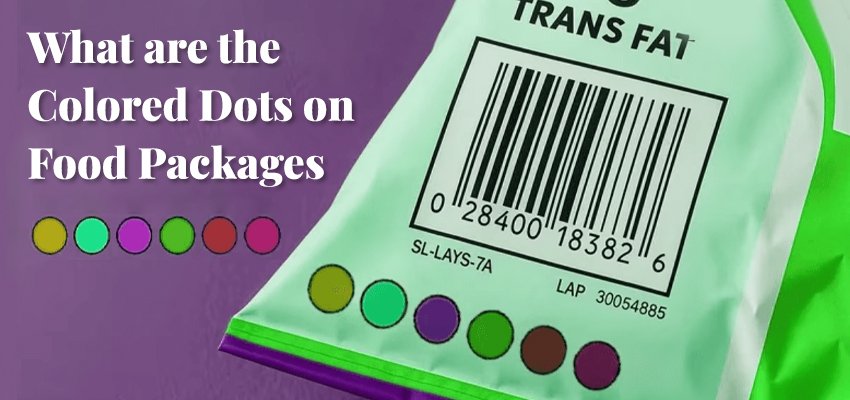
Have you ever looked at food packaging with colored dots and asked yourself whether they are going to disclose any special information on ingredients or explain food safety regulations? The fact is that those small coloured dots on food boxes are not coded ingredients but accuracy control marks. You can say…in their absence, there is a change of logos, brand colors become pale, and designs are misprinted.
Being aware of such dots prevents expensive mistakes that occur in printing, preserves color uniformity, and secures brand identity. The colored dots on the packaging assist the manufacturers in checking the ink balance, alignment, and volume density of color used during high-speed printing.
A Quick Overview of “Colored Dots”
Colored Dots are technically referred to as color registration or color control marks. It enables an operator of a printing machine to see whether the inks are set in the correct and balanced position. The current packaging is printed with CMYK systems of ink - cyan, magenta, yellow, and black - that are mixed to create all the sorts of colors on a package. When one of the inks alters even a bit, brand colors get changed, and designs become blurred.
While these dots don’t carry consumer meaning, each color plays a technical role in printing balance. Here’s how color significance works in print calibration:
| Color | Printing Significance |
| Red | Indicates magenta ink calibration and warmth balance |
| Yellow | Controls brightness and highlight tones |
| Blue | Represents cyan density accuracy |
| Orange | Used in extended gamut systems for vivid color printing |
| Black | Ensures text sharpness and contrast alignment |
| White | Often used on transparent films to control opacity layers |
The Role of Colored Circles in Packaging Quality Control
These colorful circles are mostly used as an indicator for quality control when printing. They assist in the following ways:
1: In order to make colors appear consistent and uniform across all surfaces, colored dots assist printers in adjusting ink levels and the balance of color.
2: Added colored dots serve as reference markers, helping printers to keep an eye on and regulate these specialist inks for lively, lasting output.
3: Their use guarantees that the color of a brand and product is exactly matched in every batch, so the packaging looks the same in stores, across regions, and over time.
4: In order to achieve the right colors and avoid problems like smearing or bleeding, printers can verify that the ink density is accurate by looking at these colored rings.
5: Accurate alignment of several color layers is crucial in multi-color printing procedures. Printers can verify that each color coat is properly positioned with the others by using the colored dots to confirm the registration of each layer.
6: The colored circles aid technicians in promptly identifying and diagnosing any print problems, such as color fluctuation or misalignment.
Read More: How To Choose The Best Containers Used To Transport Food Safely and Efficiently In 2026
Advantages of Color Dots on Packaging
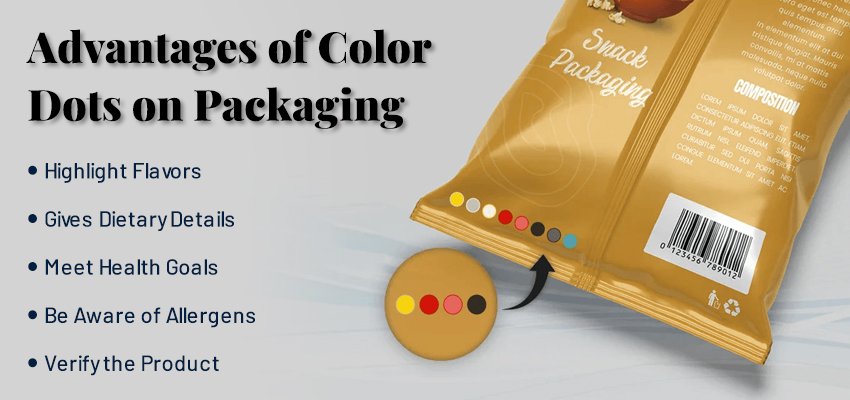
There are several uses for colored circles on food packaging, including helping customers quickly identify and comprehend crucial product information.
Highlight Flavors:
- These circles generally stand for various product types, such as chips, candies, and snack bars. For instance, it shows whether the product has a fiery or herb-based flavor.
Gives Dietary Details:
- Additionally, they can draw attention to dietary information, whether an item is organic, vegetarian, or gluten-free. Different nutritional values are represented by the various hues. Customers can more easily locate foods that meet their dietary requirements.
Meet Health Goals:
- These may highlight nutritional qualities like low-fat, high-fiber, or low-sugar. This makes it easier for customers to choose goods that meet their health objectives.
Be Aware of Allergens:
- The presence of allergens such as dairy, wheat, or peanuts can be indicated by colored circles for individuals with food allergies. This facilitates their avoidance of goods that may trigger allergic responses.
Verify the Product:
- Valuable certifications can be indicated by colored circles. This is how customers are made aware of these recommendations.
Flavour Explanation of Each Dot
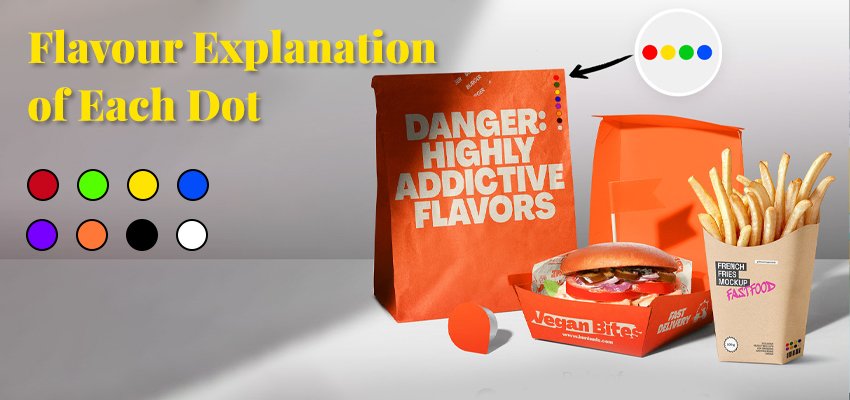
Red Circles ➜ Often represents spicy or hot flavors + high-energy or high-calorie content.
Green Circles ➜ Usually signifies natural, herbal, or vegetable-based flavors + denote organic products
Yellow Circles ➜ Often used for citrus or tangy flavors + indicates that the food product is safe for Diabetic patients.
Blue Circles ➜ Typically used for cool, minty, or berry flavors + signifies products with medical-related ingredients.
Purple Circles ➜ Often used for berry or grape flavors + emphasize products with added vitamins or minerals.
Orange Circles ➜ Commonly used for flavors like orange or tropical fruits + indicate high-fiber content and energy-boosting products.
Black Circles ➜ Often signifies bold or strong flavors like dark chocolate or coffee + indicates the chemical material used in the product.
White Circles ➜ Typically used for plain, vanilla, or unflavored options + signifies dairy-free or lactose-free products.
Why Food Packages Have Varying Colors of Dots
Continuing the debate on what are the colored squares on packaging…
Not every packaging is done with the same ink sets and substrates. They can be printed on metallic films, kraft paper, or laminated foils. Moreover, the light is reflected differently in such materials, and their calibration of colors must be special. Therefore, colored dots on packaging may sometimes be brighter, darker, or more diverse throughout products.
1. Differences in Materials and Substrate
Ink is absorbed differently in different types of packaging materials, such as plastic, paperboard, foil, or laminated films. For instance, metallic or glossy coatings reflect light and give tones a more realistic appearance, but kraft paper collects more ink and dull colors.
2. Color Systems
Many food suppliers choose expanded color systems, which contain additional dyes like orange, green, violet, or bespoke spot colors, in contrast to traditional printing, which uses CMYK inks (cyan, magenta, yellow, and black). Powerful reds, beautiful pinks, rich greens, or distinctive brand hues are frequently produced using these inks.
3. Specific Color Calibration of Brands
Considering brand recall, shelf visibility, product recognition, and customer trust depend heavily on color consistency and the brand’s predefined colors, a small change in a product's distinctive green or a logo's red can be a game-changer.
4. Printing Press and Quality Control
Each printing press (offset, flexographic, digital) and machine setup has to be calibrated, as they behave differently during production. Differences in speed, pH, or ink stream can even occur in the same press.
Conclusion
Still questioning what the colored dots on chip bags mean? Still confused, what does the green circle on food packaging indicate? The colored dots on packaging are not ingredient codes or safety symbols; they assist in regulating brand color, ensuring precision of alignment, and maintaining uniform quality in each production run.
Remember, good print quality develops stronger brand loyalty, excellent shelf life, and increased consumer confidence. It also lessens the costly mistakes.
Your Box Packaging is your go-to packaging company that is ready to provide high-quality custom packaging with impeccable print quality.
It has innovative styles and functional shapes for all brands - be it food, electronics, cosmetics, or retail. Get a package at wholesale rates with free design assistance services, free shipping, and fast turnaround.